航海少年

生活里有种人是打着一辈子单身的旗号,往往第一个结婚,早婚早育。
生活里还有一种人是从一开始就好像预告了那种40岁还经常借住在朋友家和朋友的孩子一起蹭朋友家饭吃的pattern。
从12岁时第一次阐明决不结婚的决心,到23岁为止都被人打赌说是第一种人。现在我终于过了被人误认为是第一种人的时段。家里暂且放下对第二种前景的担忧,隐约发愁第三种可能性,屡屡暗示我带个女孩子回家吃晚饭也成。我眉开眼笑说好,我考虑考虑。

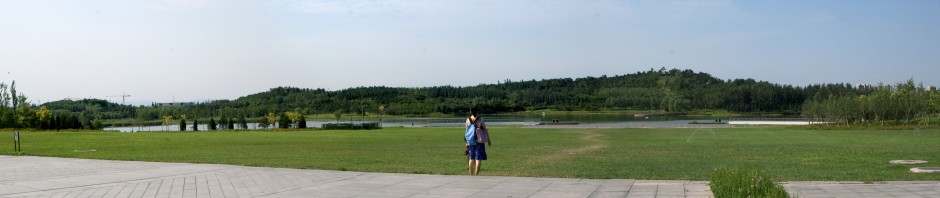
小时候个子很小不够买票线,总是随随便便就和爸爸一起出差。清晨出发前一天晚上就窝在爸爸办公室的沙发上,暗黄的灯光下竖着耳朵听爸爸打字处理文件的声音昏睡过去。还有看爸爸很耐心的拼航海的大拼图的影子,或是很郁闷的吃掉我死也不肯再碰的酸沙拉。冬天爸爸送我学琴,尽管会一路跟着自行车跑活血,手每次还是会冻僵。仅有一次两次时间尚早,爸爸会停在路边一人工湖前看一会湖,我会看看爸爸的背影再看看湖。
很多年过去那些细小的片断,阳光一照就会闪在记忆深处提醒我,爸爸和我是如何一路从孤独里走来。我自诩为最了解爸爸的人,反之亦然。然而我可能永远也无法体会爸爸一路走来有多孤独,反之亦然。

我想我只是心野。我总是想看到整个世界有多大,路有多远。我总是有无尽的好奇心,想往兔子毛尖跑,然后一路上感叹这个星球是多么奇妙。我知道人说到底都是孤独的生物。可与其有人相伴而孤独一生,我宁愿身负饕餮脚着红舞鞋永不停止一路跳下去,任荆棘划过脚尖和心脏。
发表在 未分类 | 4条评论

神奇(写于4月4日)

睡到中午起床。艳阳天。下午出门,春天到了,满草坪半裸健美肌肉男乱扔飞盘,我戴着黑框眼镜穿着黑风衣匆匆走到computer lab,打印下星期的三百页阅读,等着打印机工作的时候浏览网页。
三分钟后打印机规律的轰鸣声中我盯着然然的博客和照片发愣。十五分钟后我从computer lab走到图书馆,然后继续盯着姗姗的博客发愣。
借用姗姗的话说,256的南国佳人都是神奇的,258的北国佳人们都双了。盯着那张大学毕业时的照片不由我不想,诶我曾经觉得那张照片我照的好老怎么现在看起来那么年轻呢。突然我就很想打电话给池哇啦哇啦,然后再打电话给olivia哇啦哇啦,然后再拽嘉出来一边晚饭一边天呢哇啦哇啦。
可我终究只是翻开厚厚的阅读,盯着白纸黑字发愣。
发表在 未分类 | 一条评论

trivia game

trivia 1: Finally they realize our country is a great country in terms of keeping peaceful with the world.
trivia 2: Britain, you just piling up excuses for me to hate you, or at least find you annoying.
trivia 3: Living under the budget has never been a problem for me: I always go over the limit.
trivia 4: my life has changed a lot  since i came to nyc, but except one thing: I always got bites by COBRAS in human form. i guess the world does not change since the stone henge, you need to be strong enough to hold hammers so you will survive without being eaten or turning into another cobra.
trivia 5: the best Chinese architectural historian is definitely Liang Sicheng.  The work he has done in the 1930s during the war was a treasure to the entire humanity.  No one is even close to him.
trivia 6:

"Mist, indicated by the empty space, surrounds the pagoda, highlighting
the gap between the building and the extremely high, unapproachable mountain
peaks that dominate the upper half of the entire composition.

" My best writing of the year.
trivia 7: it is very fashionable right now to know a friend, or a colleague you can talk as he/she is your friend, who is stranded in an European airport.  thanks to Olivia, I am not out-dated.
trivia 8: i got a small cut in my mouth: every time I smile it hurts like the little mermaid waking with her newly born feet on the knives.

发表在 未分类 | 留下评论

Art for April and May

April 21st. William Kentridge at MoMA
April 23rd. Collection of Alexey Kononenko, Edo period: Shohaku, Buncho, Tanyu, Ito Jakuchu

发表在 Academia | 留下评论

A Fabulous DAY

美好一天始于逃课。
我是不逃课的学生。我会为星期五一门语言考试一门seminar而不去婚礼,因为我就是紧张到那程度。我很早就决定今天要翘掉日语和photogrpahy,8点起来跑地铁,9点半见到Brianne,下午4点回到学校。
Breakfast- MoMA-lunch.  Hanging out with Brianne is one of the most delightful things on this whole planet.  Seeing works by William Kentridge is another thing worth skipping classes. 
很久没有见到如此感染力强大,功力深厚,而又魔法般神奇的当代艺术家了。William Kentridge, A Fabulous Artist. Black Box, A journey to Moon…etc… definitely my highlight of the year 2010.
I have to go out more to see modern and contemporary art. next stop, the Yin Xiuzhen at MoMA, and Whitney Biannual.
回来上课后去和GP喝酒聊天,整整4个多小时。
发表在 未分类 | 留下评论

is that the only way that i will save/remember everything? by putting everything online,

English Words
stranded customers in the airports; be stranded

发表在 Academia | 留下评论

Miraculous

星期五晚上工作效率很高。星期六一放松就什么也没做。星期日中午起床,下午本来要去GP的讲座,坐上Bus就听到广播说因游行而改道,结果所有车都改,堵的一塌糊涂。索性步行穿越中央公园,结果当然是迷路在里面。春天万物复绿,凉爽的天气里甚是惬意,好像感官都活了过来。索性翘掉讲座,反正最近GP横竖看我不顺眼。快走到5th Ave 时听到小鼓和喇叭,原来是什么Greek celebration parade。蓝蓝白白甚是好看:我想去希腊啊!MET是Bronzino展览最后一天,用一个小时15分钟溜了两遍不过瘾。果然drawings是要细看细看再细看才能开始品其妙处啊。
回来做了瑜伽,又拖拉到12点开始写paper。终于写完draft,保存,email,5分钟后电脑crashed。无论怎样都是黑屏。谢天谢地我用iphone。
星期一下午3点,apple center的技术人员说他们无法回收任何数据,powerbook送去维修。4点,在ZARA里试连衣裙,短小的露背的纱料的麻布的丝绸的白底红纹非洲print深蓝的40美金一件我件件都想抱回家。5点半,空手走回apple center,买了新出的macbook pro。Apple is a miracle among today’s world: the staff are genuine, the design is so desirable, the idea is really original, and the product is just so cool. 回家重装系统。
星期二,从早9点到晚9点,我上了整整12个小时的课。I am a miracle. SPEECHLESS。然后9点到11点半,到rosandee家里庆祝她的生日。One thing I hate about American culture: people socialize but not talk, or share with each other’s thoughts. 暑假计划快要水落石出了,我开始查机票了,都在1800以上。I hope I can have a miraculous summer.
发表在 未分类 | 留下评论

Talking about Art and Architecture: The 2nd Question. by Gloria Yu YANG

The Second
Question: what is art history, and how is it different from history? To
be honest, I am not able to answer the question as "what is art history"
has been given different answers by thousands of great masters and the
answer of the question fundamentally determines one’s
methodology and theoretical framework.  However, recently some small
ideas
related to this topic keep popping up so I thought it might be useful
to sort over my thoughts. These scattered thoughts were inspired by
the classes of Late Renaissance Art
and Chinese Calligraphy before Tang Dynasty.

Historians usually take paintings and images as "pictures" representing a
historical place and time, namely, they are pictorial evidences of
historical, social and political events and visual revelations of thoughts.  They will say: this is a representation of
the XX war, or of the political atmosphere during XX dynasty, or that is an
illustration of a text..etc. And it is also true that even today, many
art historians, especially those in the East Asian Art field, still read
the artworks as text, discovering the MEANING behind it by
contextualizing the work in a historical place and time.  That is also
the training I have received at pitt.  However, that is not Art
History, but rather the history of Art. Another day I asked Chi what is
the most popular methodology to analyze a film, and she told me the general consent among scholars is
the textual approach, which interprets the film as a text.  I think both approaches are fundamentally WRONG.

Why?

Because Text and
Image are fundamentally different.  "An image is never, ever an
illustration of the text," a quote from Prof. Hood that I took as a
bible sentence. Take the Sistine Chapel for example, even tourist guildbooks tell you that Michelangelo based fresco of the ceiling on the bible text.  However, when you look at that image depicting God enliven Adam and compare it to the sentence in the bible, you will find the book said the God breathed the life into Adam, but no version said this process of enlivening was realized through the touching of the finger. it was the Artist’s decision, out of his goal of creating a dramatic scene, a mirror-composition between the God and Adam, and a preference of movement and twisted gesture, that leads to such a powerful image.  The same example can be also found in the handscroll of The Tale of Genji, the earliest version of which dates to the 8th Century.  The image that accompanied the text did not merely repeat the text in a visual form, but instead, the artist highlighted the emotional struggling of the characters by visual composition, such as beams diagonally dividing the space and pushing the figures into an compressed block to cause uncomfortable feeling on viewers that similar to the character’s  psychological state. In the end of the day, artists made their own choices for a powerful, pleasuring visual effect.

Not only we should pay attention to how art was made and how artist made decisions, we should also pay attention to how art was received during the time it was made.  Why? because the power of image is not limited to being seen, but it sometimes overpowered/shaped our perception of the world. Namely, what people SEE
dictates what people KNOW.   For example, we view the Ukiyo-e as art works that are beautiful, exotic, as if people made them out of aesthetic function.  However, we have to consider that a commoner in the Edo period, before the invention of photography, how can he/she access to images/paintings?  The chances were very limited, almost only through going on a pilgrimage to temple which holds image of Kannon (!they consider the images of Gods as Avatars! not a beautiful object). Or in the street they could peep through some fan shop to get some exotic themes so called "Chinese" or "Japanese" famous places.  The beautiful handscrolls/screens we saw today were almost exclusively made for the upper class.  However, when printing technology of Ukiyo-e was expanded, with its cheap price, commoners were able to access large visual information: they could see a lot of places they have never been, see a lot of activities they had never done.  Why do you think the meisho-e, the paintings of famous places were so popular among the Ukiyo-e themes?  Because they could see what they couldnot see before. By means of Ukiyo-e, they found that images of the places, even as familiar as Edo or their residence area, take an EXOTIC quality. It is like an urban spectacle.  That is what I think, why Ukiyo-e is revolutionary to the Japanese painting history. It is the same thing with that when Photography was invented and expanded in France and Britain in the early 20th Century.  Most of the Ukiyo-e, are not conceived as paintings, but as visual information in fashion, like a fashion magazine, newspaper today.

I have heard people complaining that their mediocre photographs are because they don’t have a professional camera and if they
have nikon cameras with huge pixels, they could make pictures just like those classical paintings.  I laugh at those people loudly. Hundred years ago, photographers already struggled with this question: how do we value/view a photograph?  Only a photograph that looks like a painting is a good photograph?  And the result of a series of debates and practices is that Photograph established their own value, not based on how real they could reflect the external world or a painting of the same object.  And the set of values has to do with the social change, the rise of mass production and the demand for an art form for mass (Walter Benjamin).  Photography has its own question to solve, one of which is how it shapes our perception in the modern world and how it shakes the foundation of traditional art.  One absolutely classic, wonderful article to read the role of photography in this modern industry world is Walter Benjamin’s "The Work of Art in the Age of Mechanical Reproduction," and I will not belabor on it here.

Today we live in a world besieged by visual images and benefited
from the information revolution and rapid transportation. 
We take things from google/wikipedia for granted and we take "meanings" directly, say we digest critic’s opinions without questioning their own ideological frameworks. We CHOSE to loose our own judgments for the sake of being cool in front of others.  When talk about a painting, people eagerly search the wall text or recite someone’s opinion, may it be stupid, or stupid but coated with beautiful wording, without actually looking and seeing and thinking about it.  We blind ourselves in such a world saturated with images.  How sad and ironic!!

The reason I chose to be an art historian, not a historian or sociologist,  is that I would like to open my senses, to see, to touch, to smell, to feel about this world, and also do my best to help people open their eyes to see, to establish their own truth about this world.  In that case, I believe the world is beautiful and no longer lonely.

发表在 Academia | 留下评论

小事。

令人震惊的事:高中娃娃脸同学当妈了,孩子满地跑了。
令人郁闷的事:嚼到鸡肋的时候,熊掌和鱼眼都叼到嘴里了却必须吐一个。
令人在意的事:世界三天两地连续几大洲地震,火山喷发,飞机坠毁,是不是要拿电影2012当教科书预习一下。
令人感激涕零的事:遗失的iphone被人拾到并送到学生服务中心了。

发表在 未分类 | 留下评论

Working Chart (From April 16 to May 24)

Academic Tasks
H’s Paper April 18th, 15 pp    done
Ho’s Paper April 22th 15pp   
Photography Paper May 3th 15pp  done
Edo Paper May 7th  15pp
Japanese Paper 8th April 21st 3pp in japanese  done
Japanese Paper 9th April 28th 5pp in japanese   done
Japanese Final Paper May 10th 7 pp in japanese  done
German Exam May 9th    done
Edo Painting Exam May 5th  340 images  done

School related Tasks
Annual Interview April 23rd       done
Gallery Visit Afternoon April 23rd      done
Grading Exams May 10th     60    done
Application for G  April 31th       done
Application for K  (maybe June and visa in July?)

Life
Housing April 19th
Visas      May 20th
Flight Ticket April 18th   done
Moving May 23rd
Storage  May 16th
Picking up the Piano May 11th
Japan Visa  May 16
Japan Housing April 30th
Doctor Appointment May 20th

MAY 30th, Scheduled to Leave NYC.

发表在 未分类 | 留下评论